Denver Public Schools has added 25 electric buses to its fleet ahead of the 2026-27 school year, bringing its total to 28 electric buses and electrifying 12% of its yellow bus fleet.
Denver Public Schools has added 25 electric buses ahead of the upcoming school year, bringing its electric fleet to 28 buses, or 12% of its yellow bus fleet. The $10 million purchase and $11 million charging infrastructure were covered by grants and rebates. The district projects annual fuel savings of about $123,000 and expects 75% less maintenance on the electric buses compared with diesel models, though officials say they don't yet have data on the buses' full lifetime costs.
Denver Public Schools rolled 25 new electric buses onto its routes ahead of the upcoming school year, pushing its electric fleet to 28 vehicles and putting 12% of its yellow bus fleet on batteries instead of diesel.
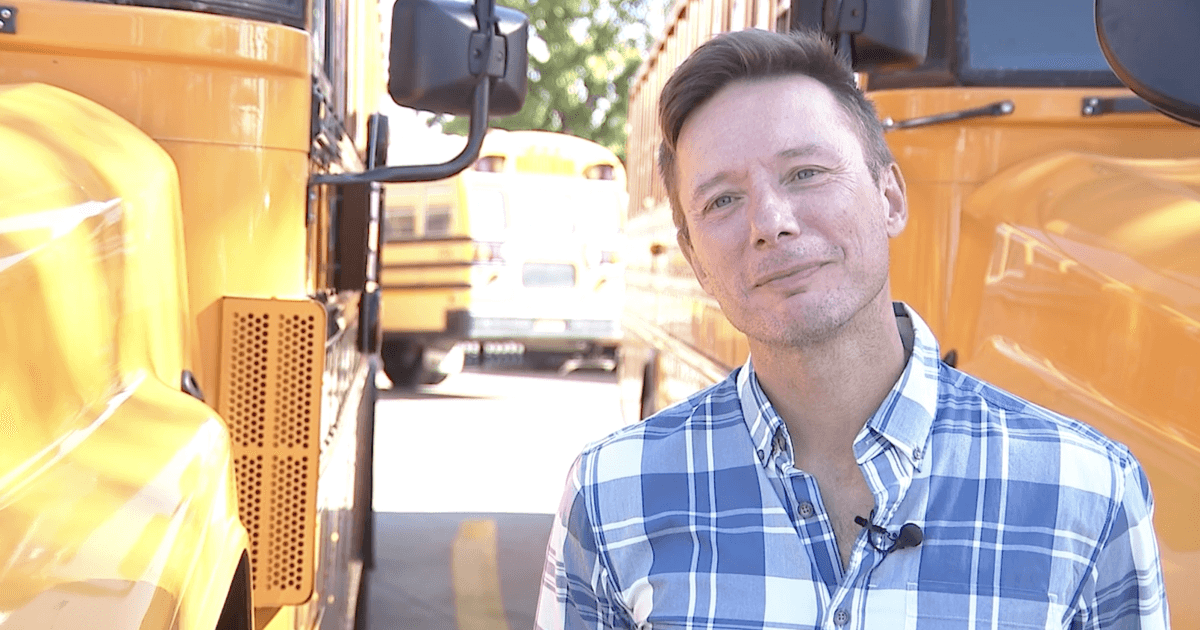
The district's Director of Sustainability, Tom Wildman, said the expansion targets one of DPS's largest sources of emissions. "This electrifies 12% of our yellow bus fleet. We'll now have 28 electric school buses on the road. Automobiles and vehicles are responsible for 14% of our overall emissions here in DPS, so this makes a significant dent," Wildman said.
The upfront cost is steep. Each electric bus ran DPS $400,000, compared with $140,000 for a diesel bus, bringing the total price tag for the 25 new buses to $10 million. Grants and rebates covered that cost along with an additional $11 million spent building out charging infrastructure to keep the buses running, according to the district.
Drivers won't notice much difference behind the wheel. DPS says the controls on the electric buses match those on diesel models, so training didn't require a separate certification process. But the buses carry added technology that diesel models don't have. "There's 360-degree cameras, radar, they have drop chains, and there's no noise," said Albert Samora, DPS's executive director of transportation.
DPS says the savings show up after the purchase. The district estimates it costs about $1,900 a year to power an electric bus with electricity, versus $6,800 a year to fuel a diesel bus, a gap the district says adds up to roughly $123,000 in fuel savings annually across the fleet. Samora said that money doesn't just sit in a transportation budget line. "Whatever is not spent in transportation goes back to education, and our goal here is to educate kids. That's probably the biggest difference on these buses," he said.
DPS expects the bigger long-term savings to come from maintenance. The district projects the electric buses will need about 75% less maintenance than diesel buses because they lack an engine and transmission. "There's an electric motor. It does have some of the same parts as a regular bus, but for the majority of it, it's 75 percent reduced in the amount of maintenance because it doesn't have an engine transmission and all those heavy parts," Samora said.
DPS acknowledged it doesn't yet have enough data to know how the total lifetime cost of an electric bus, including battery replacement and any unforeseen repairs, will stack up against a diesel bus over 10 or 15 years of service. The district is still in the early stretch of that comparison, with only 28 electric buses running compared with hundreds of diesel buses still on the road.
The purchase follows similar buys by other Colorado school districts and municipal fleets, which have used federal and state grant money to replace diesel buses. Diesel exhaust near schools has been a focus for environmental regulators, since buses idle outside schools and drive through neighborhoods twice a day. DPS's own explanation for the new buses has centered on fuel and maintenance savings rather than air quality.
For now, the 28 electric buses make up a small share of the roughly 230 buses DPS runs across the district. Further electrification will depend on whether additional grant funding materializes. The $400,000 per-bus cost is still nearly three times that of a diesel replacement without outside subsidies covering the gap. Wildman and Samora didn't give a target date for when DPS might electrify a larger share of its fleet, and the district said it will keep tracking maintenance and fuel data from the buses already on the road to build out the cost picture it's currently missing.